
Dependent personality disorder, a condition marked by an excessive need to be taken care of, casts a long shadow over individuals’ lives, influencing their relationships, decisions, and overall well-being. This pervasive pattern, often originating in childhood, can lead to a profound sense of helplessness and a deep-seated fear of abandonment, shaping every facet of existence.
From the subtle nuances of family dynamics to the complex interplay of diagnostic criteria and therapeutic interventions, this exploration delves into the multifaceted nature of dependent personality disorder. We will dissect the origins of this condition, examining how early experiences and attachment styles lay the groundwork for dependent behaviors. Furthermore, we will explore the challenges faced by those living with this disorder, the therapeutic avenues available for healing, and the impact of cultural context on its expression and treatment.
How does an individual’s upbringing influence the development of dependent personality disorder?
The roots of dependent personality disorder (DPD) often lie in the formative years, with childhood experiences playing a crucial role in shaping an individual’s sense of self and their relational patterns. The dynamics within a family, particularly the interactions between parents and children, can significantly influence the development of the core features of DPD, such as a pervasive need to be taken care of, submissive behavior, and fears of separation. Understanding these early influences is critical for both comprehending the disorder’s etiology and developing effective treatment strategies.
Familial Dynamics and the Development of Dependent Personality Disorder
Certain parenting styles and family environments are more likely to contribute to the development of DPD. These environments often involve inconsistent or inadequate emotional support, which can leave a child feeling insecure and uncertain about their own abilities.
- Overprotective Parenting: Overprotective parents, while intending to shield their children from harm, often stifle the development of autonomy and self-reliance. They may discourage independent decision-making, constantly intervening to solve problems or make choices for their children. This can lead to a child’s belief that they are incapable of functioning independently, fostering a sense of helplessness and a reliance on others for guidance and support. For example, a parent might repeatedly intervene to complete a child’s homework, preventing the child from developing problem-solving skills and reinforcing the idea that they cannot succeed without external assistance.
- Neglectful Parenting: Conversely, neglectful parenting, characterized by a lack of emotional warmth, responsiveness, and consistent care, can also contribute to DPD. Children who experience neglect may develop an insecure attachment style, leading them to crave attention and validation from others. They may become overly compliant and fearful of abandonment, seeking to please others at their own expense. A child who is consistently ignored or whose needs are unmet may develop a deep-seated fear of being alone, leading them to cling to relationships, even unhealthy ones, to avoid isolation.
- Inconsistent Parenting: Inconsistent parenting, where parents alternate between being overly involved and emotionally distant, can create a chaotic and unpredictable environment. This inconsistency can make it difficult for a child to develop a stable sense of self and trust in others. The child may learn to anticipate rejection or abandonment, leading to anxious attachment and a heightened need for reassurance. A parent who is loving one day and critical the next can leave a child feeling confused and insecure, leading to a constant need for external validation.
Early Childhood Experiences and the Shaping of Self
Early childhood experiences are critical in forming an individual’s sense of self and their subsequent need for external validation. Children internalize the messages they receive from their caregivers, shaping their beliefs about their own worth and capabilities.
- Lack of Encouragement for Autonomy: When children are not encouraged to explore their environment, make their own choices, and learn from their mistakes, they may develop a sense of inadequacy. This can lead to a belief that they are incapable of making decisions or taking care of themselves, fueling their need for external guidance and support.
- Criticism and Conditional Love: Children who are frequently criticized or whose parents’ love is conditional on their performance or behavior may develop low self-esteem and a fear of disapproval. They may become overly concerned with pleasing others and seeking external validation to feel worthy of love and acceptance. For example, a child who is only praised for academic achievements may come to believe that their worth is solely dependent on their accomplishments, leading them to seek constant approval from others.
- Modeling of Dependent Behavior: Children often learn by observing the behavior of their parents and other significant adults. If a child witnesses a parent who exhibits dependent behaviors, such as excessive reliance on others, difficulty making decisions, and a fear of being alone, they may internalize these patterns and adopt them as their own.
The Role of Attachment Styles in Dependent Behaviors
Attachment styles, developed in early childhood, significantly influence an individual’s relational patterns and can play a crucial role in the development of dependent behaviors.
- Anxious-Preoccupied Attachment: Individuals with an anxious-preoccupied attachment style often have a strong need for closeness and approval from others. They may be highly sensitive to rejection and abandonment, leading them to seek constant reassurance and validation. This attachment style can manifest as clinginess, fear of separation, and a tendency to prioritize the needs of others over their own. For example, an individual with this attachment style might constantly text or call their partner, seeking reassurance about the relationship.
- Fearful-Avoidant Attachment: Individuals with a fearful-avoidant attachment style often have a mixed desire for closeness and fear of intimacy. They may struggle with trust and may avoid close relationships to protect themselves from potential rejection or abandonment. However, underlying this avoidance is a strong need for connection, which can lead to dependent behaviors, such as seeking reassurance from others while simultaneously pushing them away.
- Dismissive-Avoidant Attachment: While less directly linked to DPD than anxious-preoccupied attachment, individuals with a dismissive-avoidant attachment style may still exhibit dependent behaviors in certain situations. They may have a strong sense of independence and self-reliance, but they may also struggle to form meaningful connections and may rely on others for practical support while maintaining emotional distance.
What are the key diagnostic criteria used to identify dependent personality disorder?
The identification of dependent personality disorder (DPD) relies on a specific set of diagnostic criteria Artikeld in the Diagnostic and Statistical Manual of Mental Disorders, Fifth Edition (DSM-5). These criteria help clinicians distinguish DPD from other personality disorders and mental health conditions. Accurate diagnosis is crucial for providing appropriate treatment and support.
Diagnostic Criteria (DSM-5)
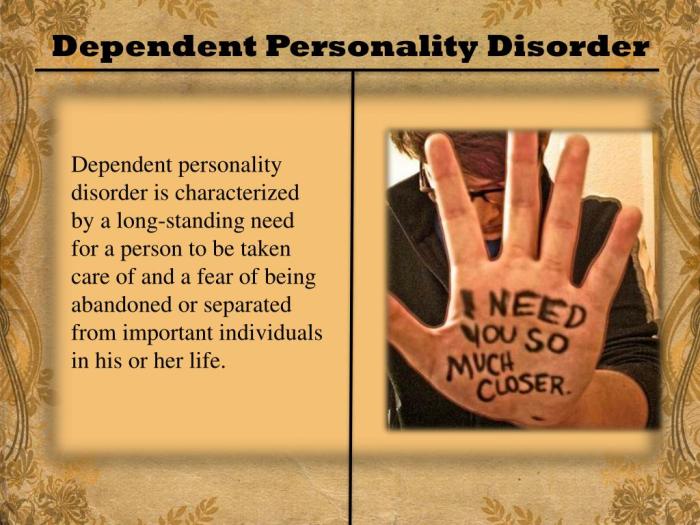
The DSM-5 specifies a pattern of pervasive and excessive need to be taken care of, leading to submissive and clinging behavior and fears of separation, beginning by early adulthood and present in a variety of contexts, as indicated by five (or more) of the following:
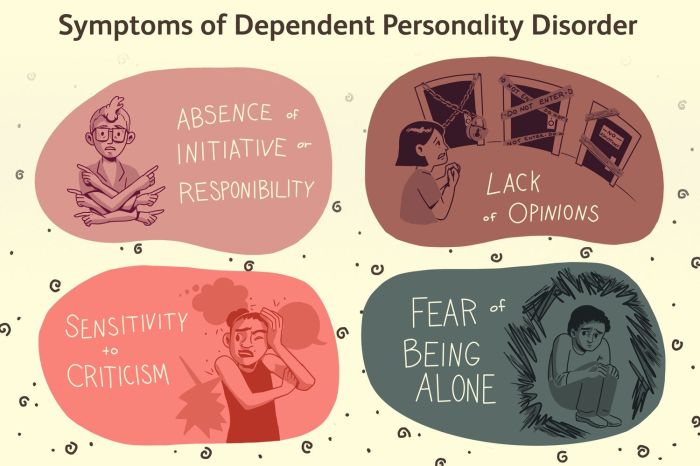
- Difficulty making everyday decisions without an excessive amount of advice and reassurance from others.
- Needs others to assume responsibility for most major areas of their life.
- Difficulty expressing disagreement with others because of fear of loss of support or approval. Note: Do not include realistic fears of retribution.
- Difficulty initiating projects or doing things on their own (because of a lack of self-confidence in judgment or abilities rather than a lack of motivation or energy).
- Goes to excessive lengths to obtain nurturance and support from others, to the point of volunteering to do things that are unpleasant.
- Feels uncomfortable or helpless when alone because of exaggerated fears of being unable to care for themselves.
- Urgently seeks another relationship as a source of care and support when a close relationship ends.
- Is unrealistically preoccupied with fears of being left to take care of himself or herself.
For instance, a person with DPD might struggle to choose what to wear without consulting a partner or friend, repeatedly seeking their approval. This goes beyond typical indecisiveness; it reflects a deep-seated fear of making a wrong choice and facing negative consequences, even for minor matters.
An individual with DPD might rely on a spouse to manage finances, make career decisions, or handle household chores, even when capable of doing so themselves. They may actively avoid situations where they are required to act independently.
This can manifest as agreeing with opinions they don’t share, even when those opinions are clearly incorrect, to avoid conflict and maintain relationships. They might fear angering someone and risking abandonment, so they suppress their own views.
A person with DPD may hesitate to start a new hobby or project without constant encouragement and support from others. This stems from a belief in their own inadequacy and a fear of failure, leading to paralysis and inaction.
They might agree to do undesirable tasks, such as cleaning up after others or running errands they dislike, to maintain relationships and avoid rejection. Their need for approval overrides their own comfort and boundaries.
Individuals with DPD often experience intense anxiety when separated from those they depend on. They may feel overwhelmed by everyday tasks and struggle to cope without the reassurance of others.
After a breakup or the loss of a relationship, a person with DPD might immediately seek a new partner, friend, or caregiver to fill the void and avoid feeling alone and unsupported. This reflects a fear of being without a source of care.
This involves persistent worry about abandonment, even when there is no immediate threat. They may interpret minor events as signs of impending rejection and constantly seek reassurance.
Comparative Analysis of Personality Disorders
The following table compares and contrasts dependent personality disorder with borderline personality disorder and avoidant personality disorder, highlighting overlapping and distinct features.
| Feature | Dependent Personality Disorder (DPD) | Borderline Personality Disorder (BPD) | Avoidant Personality Disorder (AVPD) |
|---|---|---|---|
| Primary Fear | Separation and abandonment | Abandonment (real or perceived) | Rejection and criticism |
| Interpersonal Style | Submissive, clinging, seeks reassurance | Intense, unstable relationships; idealization/devaluation | Social inhibition, avoids social contact |
| Self-Perception | Incompetent, helpless, needing care | Unstable self-image, feelings of emptiness | Inadequate, inferior, socially inept |
| Behavioral Manifestations | Difficulty making decisions, tolerates abuse, seeks approval | Impulsivity, self-harm, emotional dysregulation | Avoids social situations, hypersensitive to criticism |
| Relationship Patterns | Clingy, needs constant reassurance, tolerates mistreatment to maintain relationships | Intense, chaotic, fear of abandonment leading to desperate attempts to avoid real or imagined separation | Avoids intimate relationships due to fear of rejection, desires intimacy but struggles to connect |
What are the common challenges faced by individuals living with dependent personality disorder?
Individuals with dependent personality disorder (DPD) often encounter significant hurdles in their daily lives. These challenges stem from a deep-seated need to be taken care of, leading to difficulties in forming and maintaining healthy relationships, making independent decisions, and navigating various aspects of their personal and professional lives. The pervasive fear of abandonment fuels a cycle of clinginess, passivity, and self-doubt, impacting their overall well-being.
Relationship Difficulties
The core of DPD revolves around a profound need for others, which often manifests in problematic relationship patterns. This can lead to an imbalance of power, where the individual with DPD prioritizes the needs and desires of others, often to their own detriment. They struggle to assert their own opinions or preferences, fearing that disagreement will result in rejection or abandonment. This dynamic can be particularly challenging in romantic relationships, where the individual may become overly reliant on their partner for emotional support, decision-making, and even basic life functions.
For example, imagine a scenario where a person with DPD consistently defers to their partner’s choices, even when those choices conflict with their own interests. They might agree to move to a new city for their partner’s job, even if it means leaving behind their support network and career opportunities. They might also avoid expressing dissatisfaction with their partner’s behavior, such as excessive criticism or controlling actions, for fear of jeopardizing the relationship. This pattern of behavior can lead to resentment, emotional exhaustion, and a gradual erosion of their sense of self. In social settings, they might struggle to initiate conversations or express their opinions, fearing judgment or rejection from peers.
Challenges in Decision-Making and Independence
Individuals with DPD frequently struggle with making independent decisions, even about relatively minor matters. This difficulty arises from a lack of self-confidence and a belief that they are incapable of caring for themselves. They often seek excessive reassurance and advice from others before making even simple choices, such as what to wear or what to eat. This reliance on others can be paralyzing, hindering their ability to function independently and achieve personal goals.
For instance, consider an individual with DPD who is offered a new job opportunity. Instead of evaluating the pros and cons independently, they might spend hours seeking advice from friends, family, or even therapists, ultimately deferring to their opinions. Even after making a decision, they might continue to second-guess themselves, constantly seeking validation and reassurance that they made the right choice. This pattern of behavior can extend to financial decisions, where they may struggle to manage their finances independently, relying on others for budgeting and financial planning. This reliance can lead to financial instability and a sense of helplessness.
Consequences of the Challenges
The challenges associated with DPD can have a wide-ranging impact on an individual’s life. These challenges can manifest in several ways:
- Difficulty maintaining employment: Individuals may struggle to assert themselves in the workplace, leading to exploitation or difficulty achieving professional goals. They may also be reluctant to leave a job, even if it is unfulfilling or detrimental to their well-being, due to the fear of being alone or unemployed.
- Increased risk of abusive relationships: The need for care and the fear of abandonment can make individuals with DPD vulnerable to manipulative or abusive partners. They may tolerate mistreatment or neglect in an attempt to maintain the relationship.
- Social isolation: Difficulty expressing opinions and initiating social interactions can lead to social isolation and loneliness. They may withdraw from social situations to avoid potential rejection or conflict.
- Increased risk of mental health disorders: DPD often co-occurs with other mental health conditions, such as anxiety disorders, depression, and substance use disorders. The emotional distress associated with DPD can exacerbate these conditions.
- Difficulty adapting to change: Individuals may struggle to cope with changes in their relationships or life circumstances, such as a partner’s illness or a job loss. They may experience intense anxiety and helplessness when faced with unexpected challenges.
- Impaired self-esteem: The constant need for reassurance and the reliance on others for validation can lead to low self-esteem and a sense of worthlessness. They may struggle to recognize their own strengths and accomplishments.
What are the therapeutic approaches most effective in treating dependent personality disorder?
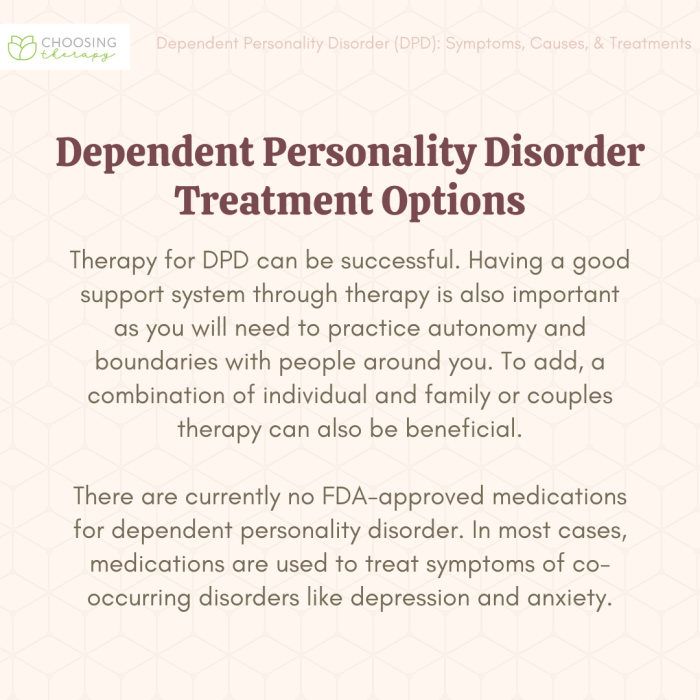
Dependent personality disorder (DPD) can be effectively managed through various psychotherapeutic interventions. These therapies aim to address the core issues of dependence, low self-esteem, and difficulties in forming healthy relationships. The choice of therapy often depends on the individual’s specific needs, the severity of their symptoms, and the therapist’s expertise. Treatment is usually a long-term process, requiring patience and commitment from both the patient and the therapist.
Cognitive Behavioral Therapy (CBT)
Cognitive Behavioral Therapy (CBT) is a structured, goal-oriented approach that helps individuals identify and change negative thought patterns and behaviors. It is a highly effective treatment for DPD, targeting the cognitive distortions and behavioral patterns that maintain the disorder.
- Identifying and Challenging Negative Thoughts: CBT helps individuals with DPD recognize their maladaptive thoughts, such as “I can’t do anything without help” or “I am worthless.” Therapists use techniques like thought records and cognitive restructuring to challenge these thoughts and replace them with more realistic and balanced perspectives. For example, a patient might initially believe they are incapable of making a simple decision. Through CBT, they learn to question this belief, examine evidence for and against it, and ultimately arrive at a more accurate assessment of their abilities.
- Behavioral Experiments: These experiments involve testing out new behaviors to challenge negative beliefs and develop more independent actions. For instance, a patient might be encouraged to make a small decision without consulting others, such as choosing a restaurant. This is then followed by analyzing the results and reinforcing the positive experience.
- Developing Assertiveness Skills: CBT often includes training in assertiveness, helping individuals express their needs and opinions directly and respectfully. This is crucial for people with DPD, who often struggle to assert themselves due to fear of rejection or abandonment. Role-playing and practicing assertive communication are common techniques used in this context.
- Goal Setting: CBT is a highly structured therapy. Therapists and patients collaboratively set specific, measurable, achievable, relevant, and time-bound (SMART) goals to promote independence and self-reliance.
Psychodynamic Therapy
Psychodynamic therapy explores the unconscious conflicts and early life experiences that may contribute to the development of DPD. This approach emphasizes understanding the roots of dependency and working through unresolved emotional issues.
- Exploring Early Relationships: Psychodynamic therapy focuses on the impact of early attachment experiences, particularly with caregivers. The therapist helps the patient understand how these relationships shaped their beliefs about themselves and others, particularly their need for approval and fear of abandonment. For instance, a patient might explore a childhood where their needs were consistently unmet, leading to a learned pattern of seeking validation from others.
- Transference Analysis: The therapist-patient relationship becomes a key focus. Patients often transfer feelings and patterns from past relationships onto the therapist (transference). The therapist helps the patient recognize and understand these patterns, providing opportunities to work through them in a safe and supportive environment.
- Insight and Self-Awareness: The primary goal is to gain deeper insight into the unconscious motivations and emotional conflicts driving dependent behaviors. This increased self-awareness helps patients understand the origins of their dependency and make conscious choices to change.
- Strengthening the Ego: Psychodynamic therapy aims to strengthen the patient’s ego, which is the part of the personality responsible for reality testing, self-regulation, and decision-making. This helps individuals develop a stronger sense of self and the ability to function more independently.
Interpersonal Therapy (IPT)
Interpersonal therapy (IPT) focuses on improving the patient’s relationships and social functioning. It assumes that problems in relationships contribute to, and are maintained by, psychological distress. This is a very useful approach for individuals with DPD.
- Identifying Relationship Patterns: IPT helps individuals identify and understand their maladaptive relationship patterns, such as seeking excessive reassurance, avoiding conflict, or being overly submissive.
- Improving Communication Skills: Patients learn to communicate their needs and feelings more effectively, which is essential for building healthier relationships. This includes practicing active listening, expressing emotions clearly, and setting healthy boundaries.
- Addressing Role Transitions: IPT can help individuals navigate significant life changes, such as the end of a relationship or a change in employment. These transitions can trigger symptoms of DPD, and IPT provides support in coping with these challenges.
- Focus on Specific Interpersonal Problems: IPT identifies four primary problem areas: grief, role disputes, role transitions, and interpersonal deficits. For a person with DPD, issues related to role disputes (e.g., struggles for autonomy within a relationship) or role transitions (e.g., the loss of a supportive relationship) are often addressed.
Therapeutic Process: A Step-by-Step Approach
A therapist’s approach to treating a patient with DPD typically involves a structured, multi-faceted process, often incorporating elements from the therapies described above.
- Assessment and Diagnosis: The initial phase involves a thorough assessment, including a clinical interview, to confirm the diagnosis of DPD and identify the patient’s specific symptoms, history, and goals for therapy. Standardized questionnaires and rating scales might be used to measure the severity of dependency and related symptoms.
- Building the Therapeutic Alliance: Establishing a strong, trusting relationship between the therapist and patient is crucial. The therapist provides a safe, non-judgmental space for the patient to explore their feelings and experiences.
- Identifying Core Beliefs and Patterns: The therapist helps the patient identify the core beliefs and patterns that underlie their dependency. This might involve exploring the patient’s early life experiences, examining their current relationships, and identifying negative thought patterns.
- Developing Self-Esteem and Autonomy: The therapy focuses on building the patient’s self-esteem and promoting autonomy. This may involve challenging negative self-perceptions, setting realistic goals, and encouraging independent decision-making.
- Teaching Coping Skills: The therapist teaches the patient coping skills to manage anxiety, stress, and other emotional challenges. These skills might include relaxation techniques, mindfulness exercises, and assertiveness training.
- Improving Relationship Skills: The therapy focuses on improving the patient’s relationship skills, such as communication, boundary setting, and conflict resolution. This might involve role-playing, practicing assertive communication, and exploring different ways of interacting with others.
- Behavioral Experiments: The therapist and patient collaboratively design behavioral experiments to test the validity of negative thoughts and promote independence. For example, a patient might be encouraged to make a small decision without consulting others and then reflect on the outcome.
- Maintenance and Relapse Prevention: The final phase focuses on maintaining the progress made during therapy and preventing relapse. This involves developing strategies for coping with future challenges and maintaining healthy relationship patterns.
How do individuals with dependent personality disorder cope with the fear of being alone?
Individuals with dependent personality disorder (DPD) experience an intense fear of separation and isolation, stemming from a deep-seated need to be cared for and a belief they are incapable of functioning independently. This fear significantly shapes their behavior, driving them to employ various coping mechanisms, both helpful and harmful, to avoid being alone. These strategies are often rooted in a desire for reassurance and a reliance on others for emotional support and decision-making.
Coping Mechanisms for Managing Fear
Individuals with DPD utilize a range of strategies to manage their fear of being alone, often reflecting a spectrum of adaptive and maladaptive behaviors. These coping mechanisms aim to maintain relationships and ensure a sense of security, even if at the expense of their own well-being.
* Seeking Constant Reassurance: This involves repeatedly asking for approval, validation, and confirmation of their abilities from others. They might constantly seek feedback, questioning their decisions and needing others to reassure them that they are making the right choices. This can be exhausting for both the individual and those around them.
* Clinging to Others: Individuals may become overly attached to specific people, such as partners, family members, or friends, and desperately try to maintain closeness. This can manifest as excessive phone calls, frequent check-ins, or a reluctance to spend any time apart, even for necessary activities.
* Self-Sabotaging Behaviors: To avoid abandonment, individuals with DPD may engage in behaviors that ultimately undermine their independence and self-worth. This can include staying in unhealthy relationships, neglecting their own needs, or intentionally failing at tasks to ensure they remain dependent on others.
* Submissive Behavior: They often yield to the desires and needs of others, even when it goes against their own wishes. This can involve agreeing with others, avoiding expressing disagreement, or volunteering to do things they don’t want to do, all to maintain the relationship and avoid potential rejection.
* Difficulty Initiating Projects: Due to a lack of self-confidence and a fear of failure, individuals may avoid starting new projects or tasks independently. They might wait for others to initiate things or offer help, further reinforcing their dependency.
Supporting Individuals with Dependent Personality Disorder
Family and friends play a crucial role in supporting individuals with DPD, helping them develop healthier coping mechanisms and fostering independence. A supportive environment can significantly improve their quality of life and facilitate their therapeutic progress.
* Providing Encouragement and Validation: Offer consistent encouragement and validate their feelings and experiences. Acknowledge their strengths and accomplishments, reinforcing their self-worth.
* Promoting Independence: Encourage them to make their own decisions, even small ones, and support their attempts at independent activities. Gradually allow them to take on more responsibilities, fostering a sense of autonomy.
* Setting Healthy Boundaries: Establish clear boundaries to prevent being taken advantage of or enabling their dependency. It’s essential to maintain a balance between support and enabling unhealthy behaviors.
* Encouraging Professional Help: Encourage them to seek professional help, such as therapy or counseling. Therapy can provide them with tools and strategies to manage their anxiety, build self-esteem, and develop healthier coping mechanisms.
* Practicing Patience and Understanding: Understand that change takes time, and progress may be gradual. Be patient and understanding throughout their journey, offering consistent support and encouragement.
* Avoiding Enabling Behaviors: Refrain from rescuing them from every situation or making decisions for them. Allow them to experience the consequences of their actions, fostering personal growth and responsibility.
What are the potential comorbid conditions frequently associated with dependent personality disorder?
Individuals diagnosed with dependent personality disorder (DPD) often experience co-occurring mental health conditions. These comorbidities can significantly impact the presentation, severity, and treatment of DPD, leading to a more complex clinical picture. Understanding these associated conditions is crucial for accurate diagnosis and effective therapeutic interventions.
Anxiety Disorders and Dependent Personality Disorder
Anxiety disorders frequently co-occur with DPD. Individuals with DPD often exhibit heightened anxiety levels, particularly related to separation or the potential loss of a significant relationship. This anxiety can manifest in various ways, including panic attacks, social anxiety, and generalized anxiety.
- Generalized Anxiety Disorder (GAD): The constant worry and apprehension characteristic of GAD can exacerbate the fear of abandonment and the need for reassurance seen in DPD. Individuals may ruminate about potential negative outcomes in their relationships, fueling their dependence.
- Social Anxiety Disorder: Fear of rejection and criticism, common in social anxiety, can reinforce the avoidant behaviors often observed in DPD. Individuals might avoid social situations to prevent potential disapproval, further isolating themselves and increasing their dependence on a few close relationships.
- Panic Disorder: Panic attacks, characterized by sudden episodes of intense fear, can be triggered by perceived threats to relationships or the prospect of being alone. This can lead to increased clinginess and efforts to maintain constant contact with others.
The relationship between anxiety disorders and DPD is often bidirectional; anxiety can intensify the symptoms of DPD, and the behaviors associated with DPD, such as excessive reassurance-seeking, can worsen anxiety. Treatment strategies need to address both conditions simultaneously.
Depressive Disorders and Dependent Personality Disorder
Depressive disorders, particularly major depressive disorder (MDD) and dysthymia, are also frequently observed in individuals with DPD. The chronic feelings of inadequacy, hopelessness, and low self-esteem that characterize depression can further fuel the dependent behaviors and the need for external validation.
- Major Depressive Disorder (MDD): The symptoms of MDD, such as persistent sadness, loss of interest, and fatigue, can overlap with the feelings of helplessness and emptiness often experienced by individuals with DPD. This can complicate the diagnosis and treatment, as symptoms may be attributed to either condition.
- Dysthymia: This chronic, low-grade depression can contribute to a pervasive sense of inadequacy and a negative self-image, reinforcing the need for external validation and support. The ongoing nature of dysthymia can make it more challenging to address the underlying issues driving the dependent behaviors.
The interplay between depression and DPD can create a vicious cycle, where depressive symptoms worsen dependent behaviors, and dependent behaviors exacerbate feelings of depression. Effective treatment often involves addressing both the depressive symptoms and the underlying personality traits.
Other Personality Disorders and Dependent Personality Disorder
DPD can co-occur with other personality disorders, further complicating the clinical presentation. The presence of other personality disorders can impact the prognosis and treatment approach.
- Borderline Personality Disorder (BPD): While both disorders involve difficulties in relationships, BPD is characterized by instability in relationships, self-image, and emotions. Individuals with DPD might be drawn to individuals with BPD, as the latter’s intense emotional needs can inadvertently fulfill the former’s need to be needed.
- Avoidant Personality Disorder (AVPD): Both DPD and AVPD involve social difficulties, but the motivations differ. Individuals with AVPD avoid social situations due to fear of rejection, whereas those with DPD may seek out relationships despite their anxieties. The combination can create a complex picture of social avoidance and dependence.
- Histrionic Personality Disorder (HPD): This disorder is characterized by excessive emotionality and attention-seeking. Individuals with HPD might initially appear appealing to those with DPD, but their need for attention can become overwhelming, potentially leading to instability in the relationship.
The presence of multiple personality disorders necessitates a comprehensive treatment approach that addresses the specific needs and challenges associated with each condition.
Impact on Prognosis and Treatment Strategies
The presence of comorbid conditions significantly influences the prognosis and treatment strategies for DPD.
- Prognosis: Comorbid conditions can worsen the overall prognosis, leading to a more chronic and debilitating course of illness. For example, individuals with DPD and MDD may experience a longer recovery time and a higher risk of relapse.
- Treatment Strategies: Treatment plans must be tailored to address all co-occurring conditions. This may involve a combination of psychotherapy, medication, and other interventions. For instance, individuals with DPD and an anxiety disorder may benefit from both cognitive-behavioral therapy (CBT) and medication to manage their anxiety symptoms.
Example: A 35-year-old woman diagnosed with DPD also suffers from GAD and MDD. Her treatment plan includes individual psychotherapy to address her DPD traits, CBT to manage her anxiety, and antidepressant medication to treat her depression. The therapist also uses a collaborative approach, coordinating care with a psychiatrist to ensure comprehensive treatment.
The presence of comorbid conditions underscores the importance of a thorough assessment and individualized treatment approach for individuals with DPD. Addressing these co-occurring conditions is crucial for improving outcomes and enhancing the overall quality of life.
How does the cultural context influence the expression and diagnosis of dependent personality disorder?
Cultural norms significantly shape how dependent behaviors are expressed and perceived, influencing the likelihood of a diagnosis. Societal values regarding independence, family structure, and gender roles can either encourage or discourage the overt display of dependence, thereby impacting the diagnostic process and treatment approaches. Understanding these cultural nuances is crucial for clinicians to avoid misdiagnosis and provide culturally sensitive care.
Cultural Influences on the Presentation of Dependent Behaviors
Societal expectations can profoundly influence how individuals exhibit behaviors associated with dependent personality disorder. For instance, cultures that prioritize collectivism and strong family ties might normalize a degree of dependence on family members, blurring the lines between typical and pathological behaviors.
- Gender Roles: In many cultures, traditional gender roles dictate that women are more nurturing and reliant on others, particularly men. This can lead to the acceptance of dependent behaviors in women, making it less likely that they will be identified as having a disorder. Conversely, men who display similar behaviors might face greater stigma and are more likely to be seen as problematic, potentially leading to earlier intervention.
- Family Structures: Cultures with extended family systems often foster interdependence. In such settings, relying on family for support and decision-making is common. This can make it challenging to differentiate between healthy family dynamics and the pathological dependence seen in dependent personality disorder. In contrast, cultures that emphasize individual autonomy may view any degree of dependence as a sign of weakness or illness.
- Individual Autonomy: Cultures that value independence and self-reliance, such as those prevalent in many Western societies, may be more likely to identify and diagnose dependent personality disorder. The emphasis on individual achievement and self-sufficiency can make any reliance on others appear more pronounced and problematic.
Comparative Analysis of Diagnosis and Treatment Across Cultures
The diagnosis and treatment of dependent personality disorder vary considerably across cultures, reflecting differing attitudes toward dependence and mental health.
- Western Cultures: In Western societies, where individual autonomy is highly valued, dependent personality disorder is more frequently diagnosed. Treatment often focuses on promoting independence and self-reliance through psychotherapy, such as cognitive-behavioral therapy (CBT) and psychodynamic therapy.
- Collectivist Cultures: In collectivist cultures, the diagnosis may be less common, and the presentation of symptoms may differ. The emphasis on family and community support may make it more difficult to distinguish between normal and pathological dependence. Treatment approaches may need to incorporate family therapy and culturally sensitive interventions that respect the importance of social connections. For example, in some Asian cultures, the concept of “interdependence” is valued, and the focus might be on balancing individual needs with the needs of the family rather than solely promoting independence.
- Examples:
- Japan: The concept of “amae,” which describes a form of dependency and emotional closeness, is culturally accepted within certain boundaries. This could potentially affect the diagnosis and treatment, with clinicians needing to differentiate between culturally appropriate behavior and pathological dependence.
- Latin America: Strong family ties and a sense of “familismo” are common. While dependence on family may be prevalent, it may not necessarily be viewed as pathological, influencing diagnostic criteria. Treatment might involve family therapy to address relational dynamics.
The varying cultural contexts necessitate a nuanced approach to diagnosing and treating dependent personality disorder. Clinicians must be aware of cultural norms and values to avoid misdiagnosis and provide culturally appropriate care.
What are the long-term impacts of untreated dependent personality disorder on an individual’s life?
Individuals grappling with untreated dependent personality disorder (DPD) often face a cascade of adverse consequences that permeate various facets of their lives. The absence of professional intervention can lead to a cycle of escalating challenges, profoundly affecting relationships, career prospects, and overall psychological well-being. Understanding these long-term impacts is crucial for recognizing the importance of seeking timely and effective treatment.
Impact on Relationships
Untreated DPD significantly impairs an individual’s ability to form and maintain healthy relationships. The core symptoms of the disorder, such as a pervasive need to be taken care of and difficulty making independent decisions, often manifest in ways that strain interpersonal connections.
- Codependency: Individuals may become overly reliant on others, often attaching themselves to partners who are controlling or emotionally unavailable. This can lead to a codependent dynamic where the individual sacrifices their own needs and desires to appease the other person, fostering resentment and instability.
- Fear of Abandonment: The intense fear of being alone can drive individuals to cling desperately to relationships, even those that are unhealthy or abusive. They may tolerate mistreatment, neglect, or infidelity to avoid the perceived abandonment. This fear can also lead to sabotaging behaviors, such as excessive neediness or jealousy, which ultimately push others away.
- Difficulty with Boundaries: Setting and maintaining healthy boundaries is extremely difficult. Individuals may struggle to say “no” or assert their own needs, making them vulnerable to manipulation and exploitation. This lack of boundaries can lead to being taken advantage of in both romantic and platonic relationships.
- Social Isolation: Ironically, the desire for connection can lead to social isolation. The fear of displeasing others, combined with a lack of self-confidence, can make it difficult to initiate or maintain friendships. As a result, the individual’s social circle may shrink, exacerbating feelings of loneliness and helplessness.
Impact on Career and Financial Stability
The challenges presented by untreated DPD extend beyond personal relationships, significantly impacting career and financial stability. The inability to make independent decisions, the fear of failure, and the need for constant reassurance can hinder professional growth and lead to significant setbacks.
- Difficulty with Decision-Making: Individuals may struggle to make even minor decisions without excessive reassurance from others, which can be paralyzing in a professional setting. This can lead to missed opportunities, poor performance reviews, and difficulty taking on leadership roles.
- Fear of Failure: The pervasive fear of making mistakes and being criticized can lead to procrastination, avoidance of challenging tasks, and a reluctance to take initiative. This can limit career advancement and result in underachievement.
- Dependence on Others for Financial Support: The need for constant reassurance and support can lead individuals to rely on others for financial assistance. This dependence can be exacerbated by difficulty holding down a job or making independent financial decisions, creating a cycle of economic instability.
- Vulnerability to Exploitation: The tendency to be easily influenced and the need to please others can make individuals vulnerable to exploitation in the workplace. They may be taken advantage of by unscrupulous employers or colleagues, leading to financial loss or emotional distress.
Increased Vulnerability to Abuse and Mental Health Issues
Untreated DPD significantly increases the risk of both physical and emotional abuse, as well as the development of other mental health disorders. The core symptoms create a fertile ground for exploitation and a heightened susceptibility to psychological distress.
- Increased Risk of Abuse: The need to be taken care of and the fear of abandonment can make individuals vulnerable to abusive relationships. They may tolerate mistreatment, both physical and emotional, to avoid being alone. This can lead to a cycle of victimization and trauma.
- Co-occurrence of Other Mental Health Disorders: DPD frequently co-occurs with other mental health conditions, such as anxiety disorders, depression, and substance use disorders. The chronic stress and emotional distress associated with untreated DPD can exacerbate these conditions, creating a complex and challenging clinical picture.
- Suicidal Ideation and Attempts: In severe cases, the hopelessness, isolation, and feelings of worthlessness associated with untreated DPD can lead to suicidal ideation and attempts. The inability to cope with the challenges of daily life and the pervasive sense of being alone can be overwhelming.
What to Do If Concerned About Someone’s Dependent Behaviors
If you are concerned about someone’s dependent behaviors, it’s crucial to approach the situation with empathy, patience, and a focus on supporting them to seek professional help. Here are actionable steps and resources:
- Educate Yourself: Learn about DPD and its symptoms. Understanding the disorder will help you approach the situation with greater compassion and provide appropriate support.
- Encourage Professional Help: Gently encourage the individual to seek professional help from a therapist or psychiatrist. Explain that therapy can provide them with tools and strategies to manage their symptoms and improve their quality of life.
- Offer Support, Not Enabling: Offer emotional support, but avoid enabling their dependent behaviors. For example, help them find resources but don’t take on their responsibilities.
- Set Boundaries: Establish and maintain healthy boundaries to protect your own well-being. This might involve limiting your availability or refusing to participate in behaviors that enable their dependency.
- Resources:
- MentalHealth.gov: Provides information about mental health disorders and resources for finding treatment.
- The National Alliance on Mental Illness (NAMI): Offers support groups, education, and advocacy for individuals and families affected by mental illness.
- Psychology Today: Offers a directory of therapists and psychiatrists.
Summary
In conclusion, understanding dependent personality disorder requires a comprehensive approach, encompassing its origins, manifestations, and potential treatments. By examining the impact of familial dynamics, diagnostic criteria, and cultural influences, we gain a deeper appreciation for the complexities of this condition. Addressing the fear of being alone, the need for reassurance, and the challenges in maintaining healthy relationships is crucial for individuals seeking to reclaim their autonomy and build fulfilling lives. Ultimately, recognizing the signs, seeking appropriate therapeutic interventions, and fostering a supportive environment are essential steps toward recovery and well-being.
